News and Events
-
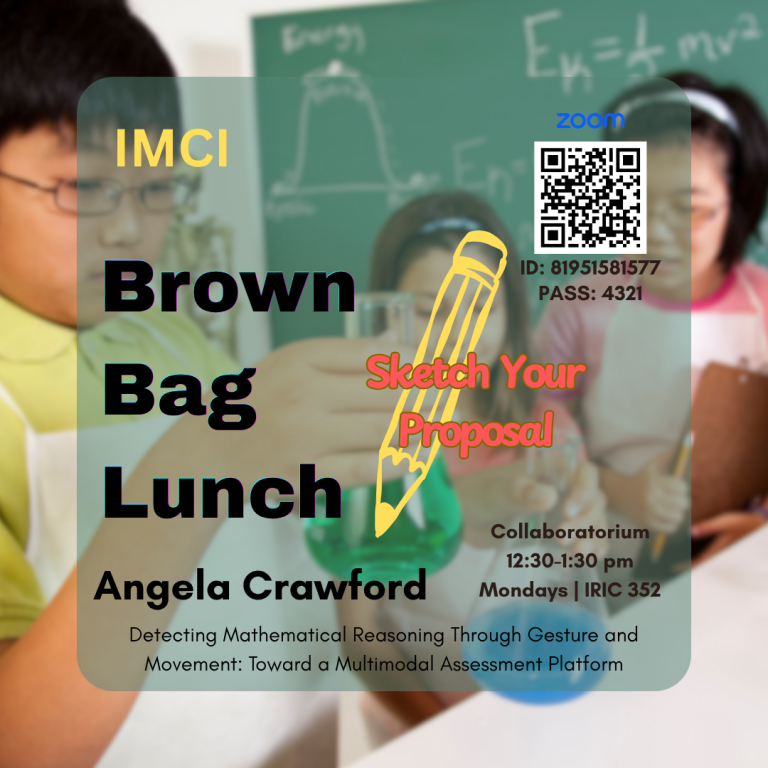
Brown Bag Lunch Sketch Your Proposal: Detecting Mathematical Reasoning Through Gesture and Movement: Toward a Multimodal Assessment Platform.
• April 6, 2026
Our next Brown Bag Lunch, Sketch Your Proposal session is happening Monday, April 13, from 12:30-1:30 PM in the Collaboratorium (IRIC 352). How do students communicate mathematical reasoning they can’t yet put into words? Join the conversation as Angela Crawford, an Assistant Research Professor of STEM Education, investigates behavioral signals, such as gesture and student-generated inscriptions, of proportional… -

IMCI & COBRE Co Sponsored Workshop Event: A Practical Guide to Unlocking Nutrition & Health Databases for Research
• April 3, 2026
Please come join us for a special workshop happening Wednesday, April 29, from 12:30-1:30 PM, in the Collaboratorium (IRIC 352) when IMCI will host a co-sponsored event with COBRE in Nutrition & Women’s Health. Titled: A Practical Guide to Unlocking Nutrition & Health Databases for Research,Léa Dussurget & Dr. Janet Williams will provide an introductory workshop on data access and extraction… -

Brown Bag Lunch: Sketch Your Proposal – Adrianne Griebel-Thompson: Dietaryand supplemental iodine intake, human milk iodine concentration, and urinary iodine concentration of US lactating women and infants.
• April 1, 2026
This is an announcement of our upcoming Brown Bag Lunch happening Monday, April 6, from 12:30-1:30 PM in the Collaboratorium (IRIC 352). Join us for our first of many Sketch Your Proposal (SYP) sessions—starting with Adrianne Griebel-Thompson‘s, titled: Dietary and supplemental iodine intake, human milk iodine concentration, and urinary iodine concentration of US lactating women and infants. These… -
New Seed Grant Program! Call for Proposals!
• March 31, 2026
IMCI invites proposals for a new Seed Grant Program. IMCI Seed Grants provide between $2000 and $20,000 of funding to stimulate innovative and adventurous model-based and/or interdisciplinary research at the University of Idaho. We envision these seed grants could be used for a wide range of purposes, such as generating preliminary data, building new collaborative teams, building a novel high risk, high reward model, or going on a team retreat to write a large interdisciplinary grant proposal. We will focus on funding smaller… -
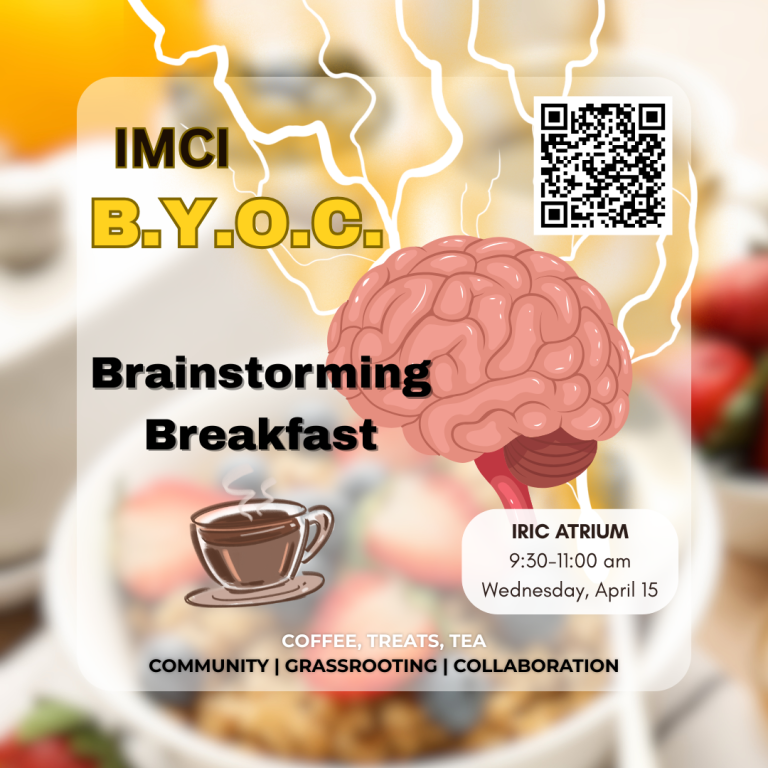
BYOC: Brainstorming Continental Breakfast
• March 26, 2026
Come join us for a special Bring Your Own Cup (BYOC) session: Brainstorming Breakfast, happening Wednesday, April 15, from 9:30-11 AM in the IRIC Atrium.A FREE continental breakfast, coffee, and tea will be provided. Join us for the same great social hour IMCI is known for, but with a chance to contribute ideas for research,… -
-
- Celebration
- |
- Congratulations
- |
- EAC
- |
- Events
- |
- News
Event: IMCI Advisory Committee Gala
• March 26, 2026
-
Brown Bag Lunch: Confluence Lab narrative science collaboration
• March 25, 2026
We are happy to announce our upcoming Brown Bag Lunch happening Monday, March 30, from 12:30-1:20 PM in the Collaboratorium (IRIC 352). In association with the narrative science project presented by Erin James during her Brown Bag Lunch: The Story Model, Confluence Lab co-founder, Jennifer Ladino, and interns of the Confluence Lab will be joining us this Monday… -
Post Brown Bag Lunch: Erin James, The Story Model
• March 21, 2026
Following the Erin James’s lively Brown Bag Lunch: The Story Model, IMCI is sharing the opportunity to collaborate with interns from the Confluence Lab. Are you looking to increase the impact of your research with storytelling? We are the Confluence Lab of the University of Idaho, an interdisciplinary outfit that brings together the sciences, arts, and…