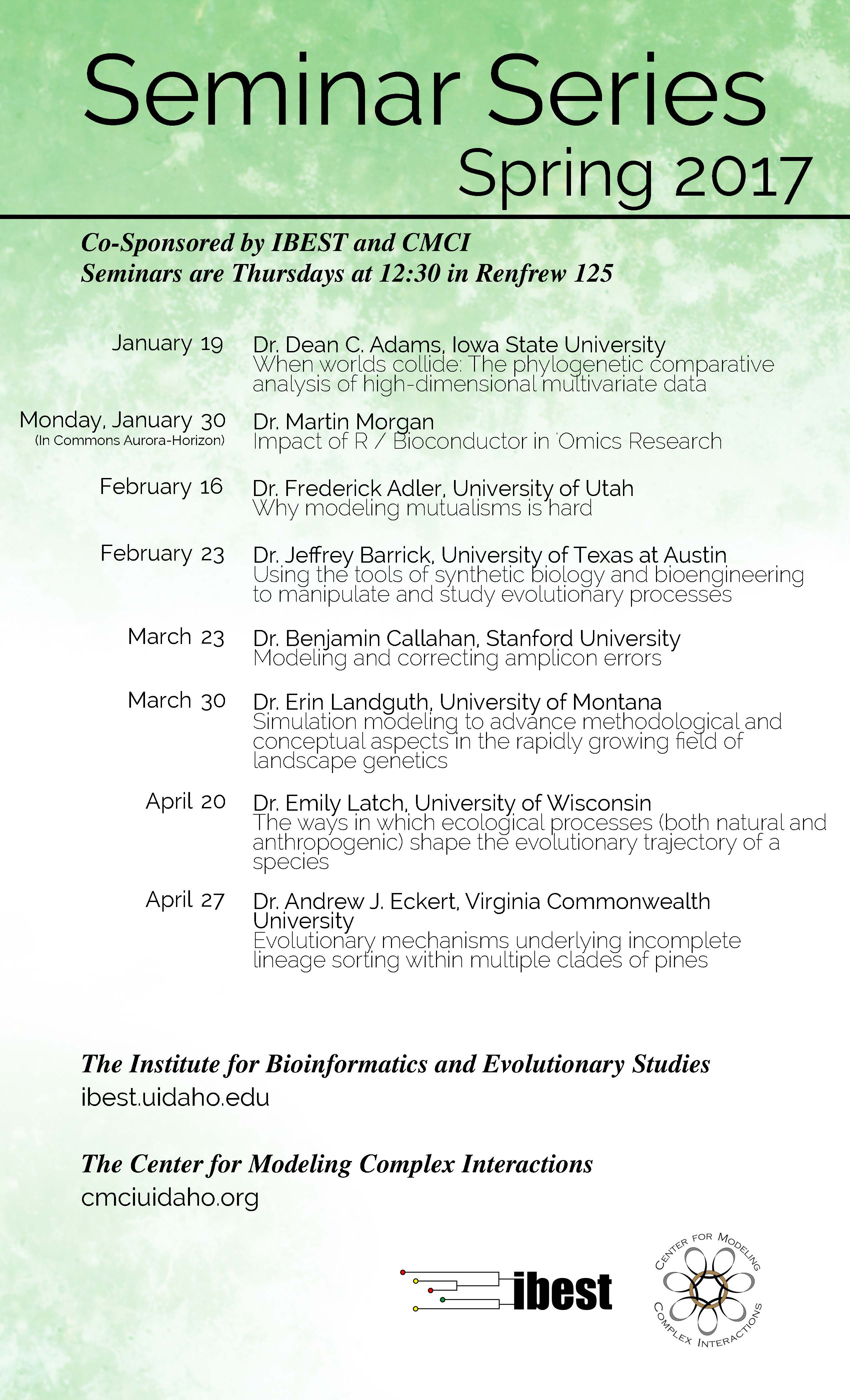
Spring 2017 Seminar Series


Dr. Bryan Cwik, Assistant Professor of Philosophy and University Studies at Portland State University, will be speaking at CMCI’s Brown Bag Lunch on Monday, February 11, 12:30 p.m., in the Collaboratorium. Title: Moving Beyond ‘Therapy’ and ‘Enhancement’ in the Ethics of Gene Editing Abstract: Since the advent of recombinant DNA technology, expectations (and trepidations) about…

The Office of Research and Faculty Development offers a weekly seminar that guides faculty through the proposal development process of competitive external grants. All faculty are invited and welcome to attend in person or via Zoom.

We have a great line up of talks for the Fall 2018 CMCI/IBEST shared seminar series. Mark these dates on your calendar and plan to attend! All seminars are on Thursdays at 12:30 in the Engineering/Physics Building, room 122.
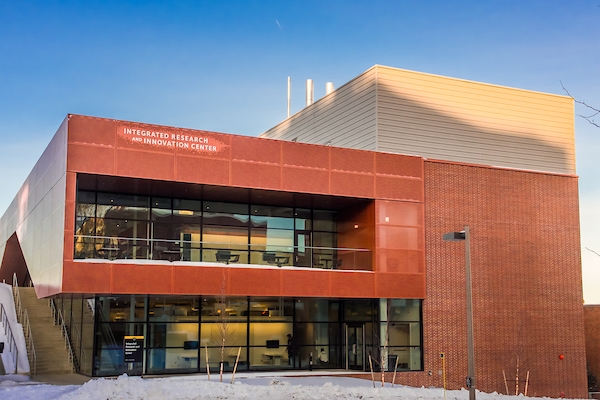
Event: CMCI Brown Bag Lunch Date: Monday, November 12 Time: 12:30 – 1:30 p.m. Place: Collaboratorium, IRIC 352 Talk: “Performance of a bacterial cell as an energy conversion device in terms of energy-return-on-investment determined from atomic-detail structural models,” presented by Melih Sener, Theoretical and Computational Biophysics Group, Beckman Institute, UIUC, https://www.ks.uiuc.edu/~melih/ Abstract: Bioenergetic…
Like many of you, IMCI continues to monitor and follow university, state and national guidelines in regards to the Coronavirus COVID-19 pandemic. Please be aware that the Seminar scheduled on April 2 has been canceled. The Seminar on April 16 with Rachael Bay from UC Davis will be held virtually. You may participate from IRIC…
Due to extreme weather conditions and canceled travel, our scheduled speaker for today’s Brown Bag Lunch, Bryan Cwik, will NOT be here. Instead, today’s BBL will be an OPEN DISCUSSION. We will work with Dr. Cwik to reschedule his talk.