Get Involved | News | Events | Brown Bag Lunch | Collaboratorium | About Us
Similar Posts
Bryan Cwik Brown Bag Lunch Speaker
Dr. Bryan Cwik, Assistant Professor of Philosophy and University Studies at Portland State University, will be speaking at CMCI’s Brown Bag Lunch on Monday, February 11, 12:30 p.m., in the Collaboratorium. Title: Moving Beyond ‘Therapy’ and ‘Enhancement’ in the Ethics of Gene Editing Abstract: Since the advent of recombinant DNA technology, expectations (and trepidations) about…
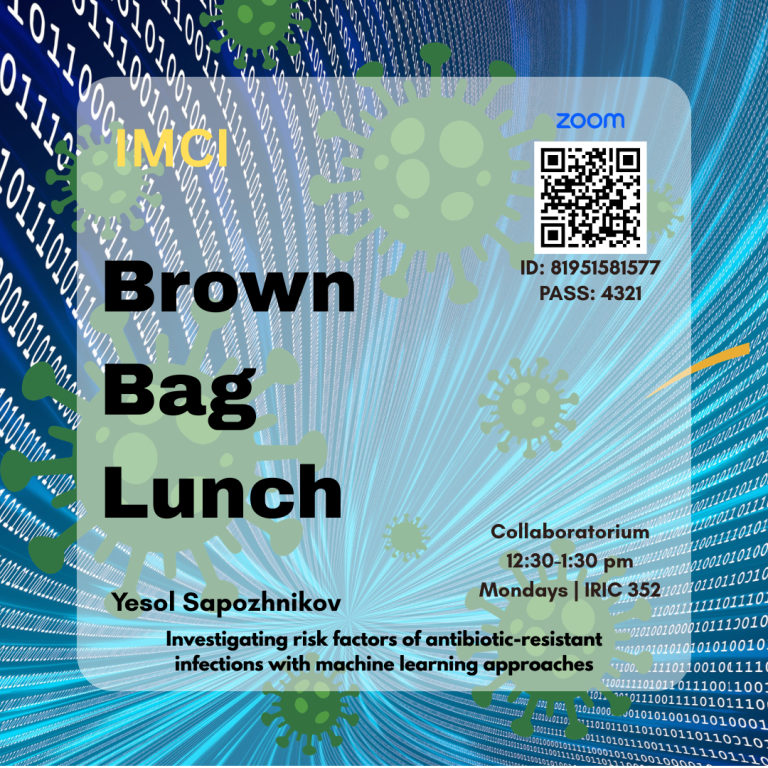
Brown Bag Lunch: Yesol Sapozhnikov – Sketch Your Proposal – Investigating risk factors of antibiotic-resistant infections with machine learning approaches
Hello and good evening, IMCI crew, This is a correction from our previous announcement. We have a different guest and topic than previously announced joining us for this Brown Bag Lunch. Please see this, the adjusted announcement. Please join us for our next Brown Bag Lunch happening Monday, April 27, from 12:30-1:30 PM in the Collaboratorium (IRIC 352). In this seminar style session,…
Brown Bag Lunch Series: LLM Reasoning in Healthcare: Faithful Explanations or Plausible Rationalizations?
Achieving trustworthy AI in healthcare remains a significant challenge, as existing eXplanation Artificial Intelligence (XAI) methods like attention maps or LIME/SHAP are often dismissed by clinicians and patients as uninterpretable. While the reasoning LLMs initially seemed promising for generating natural-language explanations, they often create unfaithful rationalizations that obscure a model’s true logic. To solve this,…
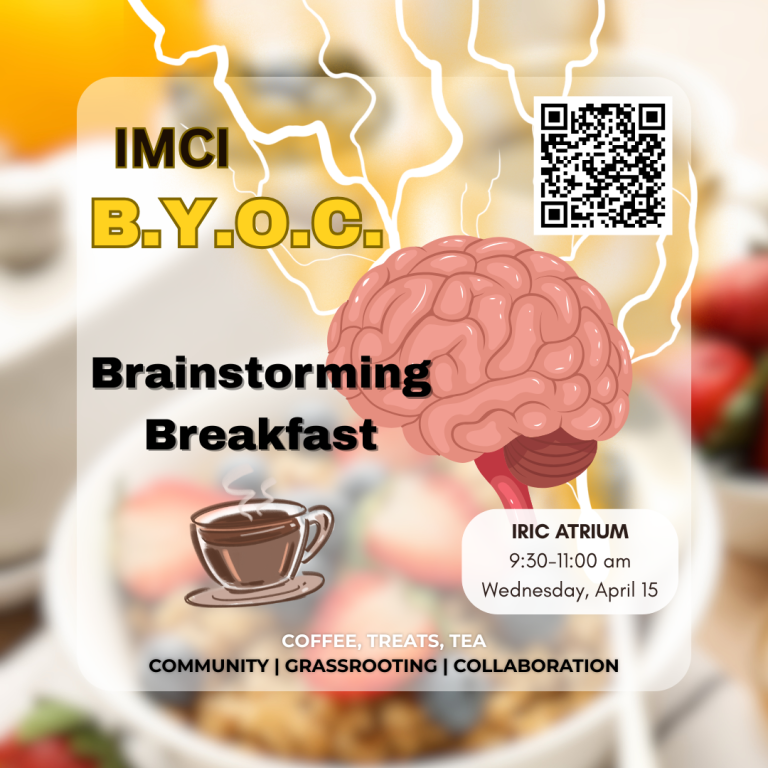
BYOC: Brainstorming Continental Breakfast
Come join us for a special Bring Your Own Cup (BYOC) session: Brainstorming Breakfast, happening Wednesday, April 15, from 9:30-11 AM in the IRIC Atrium. A FREE continental breakfast, coffee, and tea will be provided. Join us for the same great social hour IMCI is known for, but with a chance to contribute ideas for…