
Skip to content
Institute for Modeling Collaboration and Innovation
  • Home
  • People
  • ResearchExpand
    • Funding OpportunitiesExpand
      • Data Access Grants
      • Pilot Projects
      • Modeling Access Grants
    • Publications
    • Working GroupsExpand
      • AI Ethics and Inquiry
    • Image & Data Acquisition CoreExpand
      • Equipment
      • Services and Rates
  • InternalExpand
    • Travel and Reimbursement
    • Request for Meeting or Work Space
    • Academic Posters and Office Resources
    • Grants Proposals Preparation
  • News & EventsExpand
    • News
    • Event Calendar
  • Contact
Institute for Modeling Collaboration and Innovation

  • The Effect of Genetic Variation on the Interaction Between Primate Lentiviruses and Host Proteins
    Modeling Access Grants | Research Projects

    The Effect of Genetic Variation on the Interaction Between Primate Lentiviruses and Host Proteins

    April 20, 2015

    Project Team: Paul Rowley (PI), Jagdish Patel The interaction of host proteins with lentiviruses and other retroviruses and retrotransposons represents a major research theme of the Rowley lab. The proposed work fits well with the mission of the NIH and is a field of study that has traditionally been well supported. Dr. Rowley is fully…


    Read More The Effect of Genetic Variation on the Interaction Between Primate Lentiviruses and Host ProteinsContinue

  • Developing Statistical Models and Computer Simulations to Tackle Science’s Reproducibility Crisis
    Modeling Access Grants

    Developing Statistical Models and Computer Simulations to Tackle Science’s Reproducibility Crisis

    April 20, 2015

    Project Team: Berna Devezer (PI), Erkan Buzbas, Gustavo Nardin Reproducibility of scientific findings has long been considered a pillar of science. However, in the last decade, many disciplines life sciences have failed to reproduce major research findings. This reproducibility crisis has triggered a shift to revise current research practices. Examples include how to make biomedical findings more reproducible…

    Read More Developing Statistical Models and Computer Simulations to Tackle Science’s Reproducibility CrisisContinue

  • Project 3: Agent-Based Modeling of Co-Infection
    Research Projects

    Project 3: Agent-Based Modeling of Co-Infection

    April 20, 2015

    Project Director: Bert Baumgaertner Project Team: Joseph DeAguero How pathogens spread through a population can be complicated by a number of factors. One of them is pathogen interaction during co-infection. Here infection by one pathogen can change host susceptibility to a second, or being co-infected can change a host’s infectivity compared to a singly infected…

    Read More Project 3: Agent-Based Modeling of Co-InfectionContinue

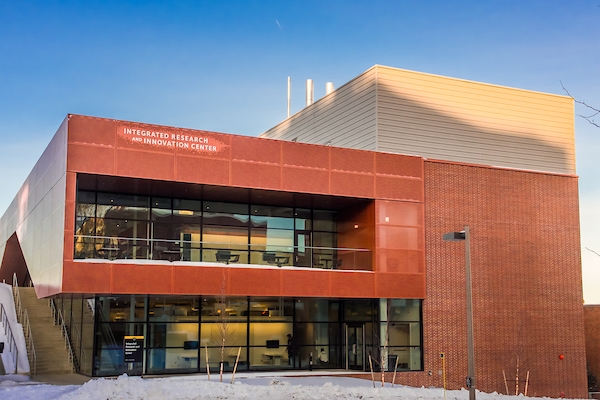
  • IRIC building in winter
    Research Projects

    Project 2: Multi-Level Dynamics of Viral Co-Infection

    April 20, 2015

    Project Director: Christine Parent Project Team: Tanya Miura, Jake Ferguson, Andrea Gonzalez-Gonzalez, Jagdish Patel, JT Van Leuven, Ashley DeAguero With the increasing global mobility of human populations, individuals are being exposed to an increasing diversity of viruses. Many approaches are used to study viral coinfections at different organizational levels, ranging from very detailed molecular studies…

    Read More Project 2: Multi-Level Dynamics of Viral Co-InfectionContinue

  • Project 1: Disease Severity During Viral Co-Infection
    Research Projects

    Project 1: Disease Severity During Viral Co-Infection

    April 20, 2015

    Project Director: Tanya Miura Project Team: Craig Miller, Onesmo Balemba, Jake Ferguson, Jagdish Patel, JT Van Leuven, Andres Gonzalez Viral infections in the lower respiratory tract cause severe disease and are responsible for a majority of pediatric hospitalizations, approximately 20% of which are infected by more than one viral pathogen. Clinical data indicate that disease severity…

    Read More Project 1: Disease Severity During Viral Co-InfectionContinue

  • Tackling Critical Issues in the Ebola Epidemic Through Modeling Viral Evolution
    Past Research Projects

    Tackling Critical Issues in the Ebola Epidemic Through Modeling Viral Evolution

    March 29, 2015

    Project Team: Marty Ytreberg (PI), Celeste Brown (Co-PI), Craig Miller (Co-PI), Holly Wichman, Tanya Miura, Chris Mirabzadeh, Kyle Martin Ebola surface glycoprotein (blue) bound by antibodies (brown). In dark blue are other known epitopes (antibody binding sites). In orange and red are mutations from the recent epidemic in West Africa. The goal of this project,…

    Read More Tackling Critical Issues in the Ebola Epidemic Through Modeling Viral EvolutionContinue

  • Modeling Variability in Persistence Induced From Within by a Toxic Metabolite
    Past Research Projects | Pilot Programs

    Modeling Variability in Persistence Induced From Within by a Toxic Metabolite

    March 29, 2015

    Project Team: Christopher Marx (PI), Andreas Vasdekis (Co-PI), Chris Remien, Siavash Riazi, Denis Liyu Multidrug antibiotic persistence, which allows some cells that lack genetic resistance to survive antibiotic stresses by becoming dormant, is a major public health concern. This exploratory project will use data from state-of-the-art image cytometry and single-cell analysis in combination with mechanistic mathematical…

    Read More Modeling Variability in Persistence Induced From Within by a Toxic MetaboliteContinue

  • IRIC building in winter
    Past Research Projects

    Determining the Regulation of Chlamydial Development Through Experimental Modeling

    March 29, 2015

    Project Team: Scott Grieshaber (PI), Nicole Grieshaber, Anders Omsland, Christopher Remien Chlamydia are obligate intracellular bacteria that cause a range of diseases in both man an animals. Chlamydia like bacteria infect just about all eukaryotic organisms on the planet, from man to amoeba. All Chlamydiae, including the human pathogens C. trachomatis, C. pneumoniae, and C. psittaci, share a…

    Read More Determining the Regulation of Chlamydial Development Through Experimental ModelingContinue

  • Multi-Scale Model of Interactions Between Lung and Pulmonary Ventilation
    Past Research Projects | Pilot Programs

    Multi-Scale Model of Interactions Between Lung and Pulmonary Ventilation

    March 29, 2015

    Project Team: Tao Xing (PI), Gordon Murdoch (Co-PI), Michelle Wiest, Loel Fenwick, Rabijit Dutta Without adequate respiration, life ceases in as little as three minutes. The failure of effective spontaneous respiration requires immediate intervention to preserve life. However, lungs are far more complicated than simple bags at the ends of tubes. Life support or therapeutic…

    Read More Multi-Scale Model of Interactions Between Lung and Pulmonary VentilationContinue

  • GenoPheno Modeling Working Group (GPmod)
    Working Group

    GenoPheno Modeling Working Group (GPmod)

    October 18, 2014January 26, 2025

    Working Group leader: Marty Ytreberg Group members: Craig Miller, Tanya Miura, Paul Rowley, Holly Wichman, Brenda Rubenstein, Jagdish Patel, JT Van Leuven, Ticak Tomislav, Angela Crabtree, LuAnn Scott, Kevin Hutchison, Yesol Sapozhnikov, Jonathan Barnes, Laura Steiner, Sierra Beach, Shunji Li, Peik Lund, Hersh Gupta, Erin Skeens, Gabriel Monteiro da Silva, Jordan Yang, Mohamed Megheib Originated:…

    Read More GenoPheno Modeling Working Group (GPmod)Continue

Page navigation

Previous PagePrevious 1 … 25 26 27

© 2025 Institute for Modeling Collaboration and Innovation

Scroll to top
  • Home
  • People
  • Research
    • Funding Opportunities
      • Data Access Grants
      • Pilot Projects
      • Modeling Access Grants
    • Publications
    • Working Groups
      • AI Ethics and Inquiry
    • Image & Data Acquisition Core
      • Equipment
      • Services and Rates
  • Internal
    • Travel and Reimbursement
    • Request for Meeting or Work Space
    • Academic Posters and Office Resources
    • Grants Proposals Preparation
  • News & Events
    • News
    • Event Calendar
  • Contact
Search